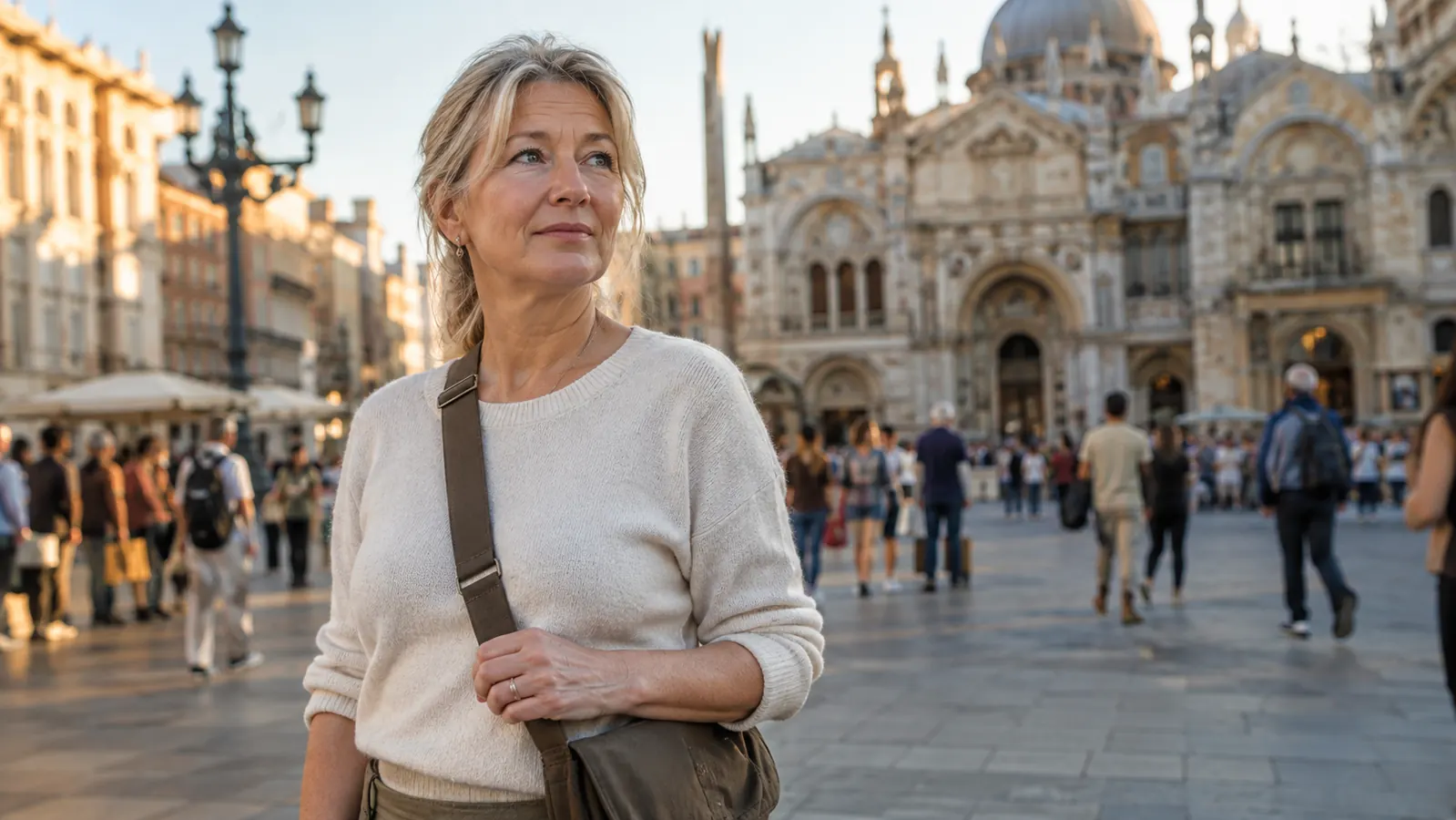
I have a confession to make about the summer I turned 77: I stopped enjoying the crowds. Standing in line at the Vatican, shuffling through a market in Barcelona, waiting for a tram in Amsterdam, I spent more time patting my purse than looking at anything. My old shoulder purse had a magnetic snap that a child could open, and I knew it. Half the trip I was a nervous wreck, and the other half I was annoyed at myself for being one. A friend from my church book club finally said, 'Loretta, you need a bag that does the work for you.' She showed me her Travelon Anti-Theft Classic Messenger Bag, and I ordered one before the week was out. Two years and a dozen crowded trips later, it is the best travel purchase I have made, and this is how I actually use it.
I tried the other fixes first, and they all failed in their own way. A money belt under my clothes kept my passport safe but made me dig under my shirt at every ticket window. A fanny pack screamed tourist and still hung in front of me like a target. And the old advice about keeping your hand on your purse? My hand was on my purse, and a man in Rome still got the zipper half open before I felt it. The problem was never my vigilance. It was the bag. Once I switched to a bag that fights back, the whole trip relaxed, and I started noticing something I had missed on every trip before: everyone else in the crowd was still patting their purses.
Before I get into the steps, one honest note. No bag makes you invisible. If someone is determined enough, they can take almost anything. What the Travelon bag does is make you the hardest person in the crowd to rob, and that is all you need. Thieves want the easy target, and with these five steps, you are not it.
The bag that ended my pickpocket worry
I bought my Travelon Anti-Theft Classic Messenger Bag two years ago for a river cruise in Europe. It has been to Rome, Barcelona, Amsterdam, and a dozen other crowded places since. It locks, it clips, and it keeps my hands free, which matters more than I can tell you.
Amazon Check Today's Price on Amazon →Step 1: Start with a bag that is built to be stolen from
The first step is not a habit. It is the bag itself. You can do everything else right, but a purse with a magnetic snap is an invitation, and every thief in a crowded square knows it. The Travelon messenger bag has three things my old purse never had: zippers that lock, a strap with a steel cable woven through it, and a clip that anchors the whole bag to something solid.
The zippers are the part I love most. Each one has a small clip that you press to unlock and press again to lock. When the clips are closed, a pickpocket cannot quietly slide the zipper open. They would have to fumble with two little clips, and fumbling is exactly what a thief does not want to do in a crowd. That is the whole idea: make the bag harder to open than the one next to it.
The cut-resistant strap matters more than you would expect. Pickpockets in tourist spots often work in teams. One bumps you, and while you are turned, the other slashes the strap and walks off with the bag. A strap with a steel cable inside does not give them that easy win. The bag stays on your body, and the team moves on to an easier target. I have watched it happen, and I have never once been the easier target.
Step 2: Give everything one home and only one home
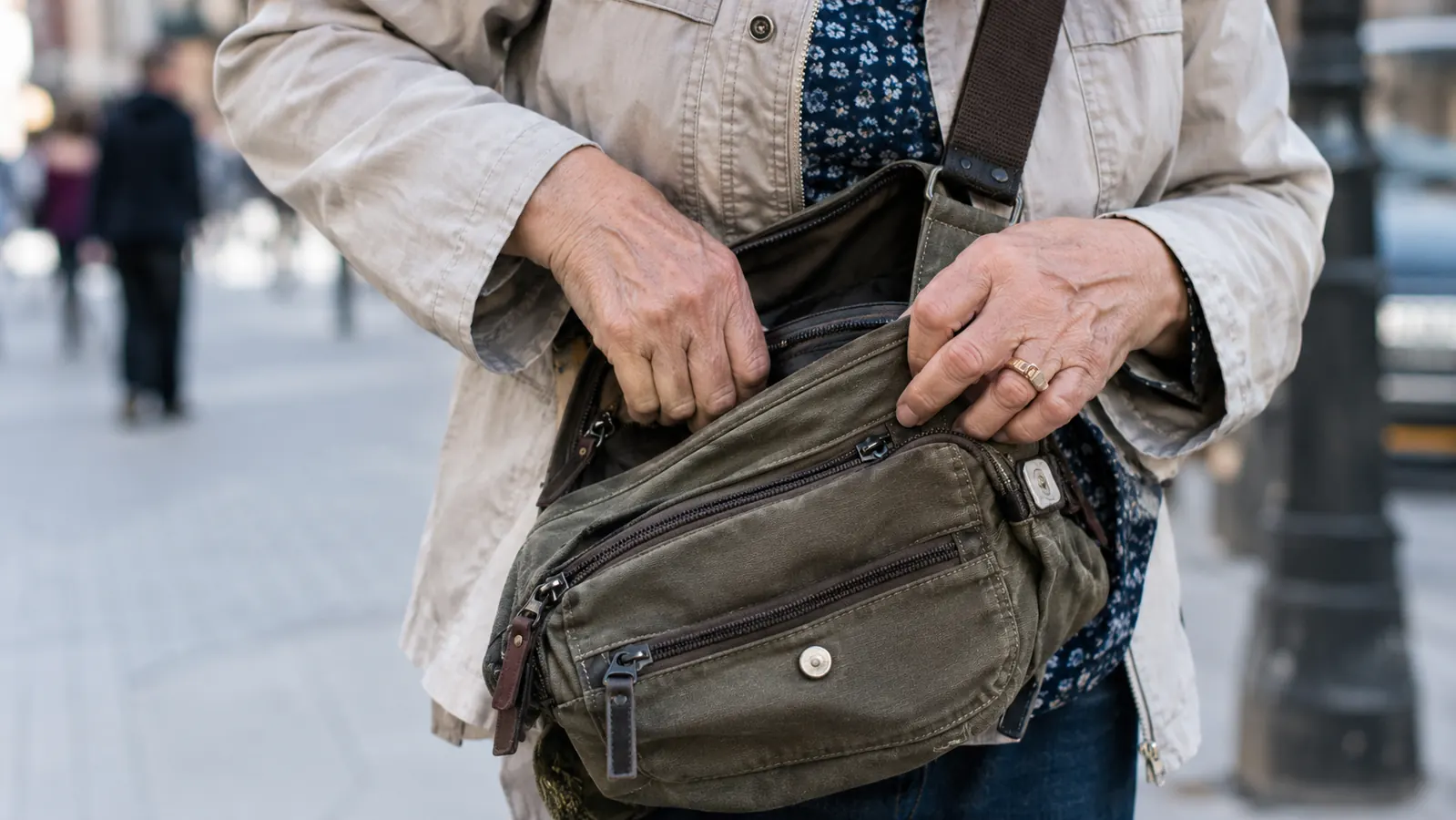
Here is the habit that has saved me more times than any zipper: every item lives in the same pocket every single day. My passport rides in the back pocket. My phone goes in the front slip pocket. My glasses live in the middle compartment. Cash goes in the small inside zip. I do not have to hunt, and more importantly, I can tell in one second when something is missing.
On my old purse, everything sank to the bottom in one jumbled pile. I would dig for my phone, and while I dug, I was not watching anything else. The Travelon bag has enough small pockets that everything has a place, and the RFID-blocking pocket means my passport and cards are not broadcasting to anyone standing close with a scanner. That pocket is the one I use for the things I cannot replace.
The rule that makes it work is simple: nothing goes in the bag that does not have a home. No loose lip balm rolling around, no keys dropped in on top of the map, no crumpled receipt stuffed into the phone pocket. If it does not have a pocket, it does not travel. That sounds fussy, but it is the difference between a bag you can check by feel in two seconds and a bag you have to empty onto a bench to find anything.
Step 3: Wear it like you mean it
How you wear the bag matters as much as the bag itself. I wear mine across my body, with the strap over my left shoulder and the bag resting on my right hip, in front of me. Not behind my hip, where I cannot see it. In front, where it lives in my own line of sight. In a crowd, I rest my forearm across the top of it. That one gesture makes the bag nearly impossible to open without me noticing.
The mistake I see other travelers make is swinging the bag around to their back when they stop to look at something. You stop at a market stall, turn to look at the scarves, and your bag is now hanging behind you, out of sight. Train yourself to give the bag a little tug to the front before you stop to look at anything. It becomes automatic after a few days, and it costs you nothing.
Strap length matters too. I keep mine snug, not dangling at my hip. A snug strap keeps the bag against my body, so it moves when I move and I feel any tug on it. A long, loose strap lets the bag swing and bounce, and a swinging bag is an easier target. With my stiff knees, a snug bag that stays put is also one less thing to manage on stairs and cobblestones, and there are a lot of cobblestones in Europe.
Step 4: Anchor it when you sit down
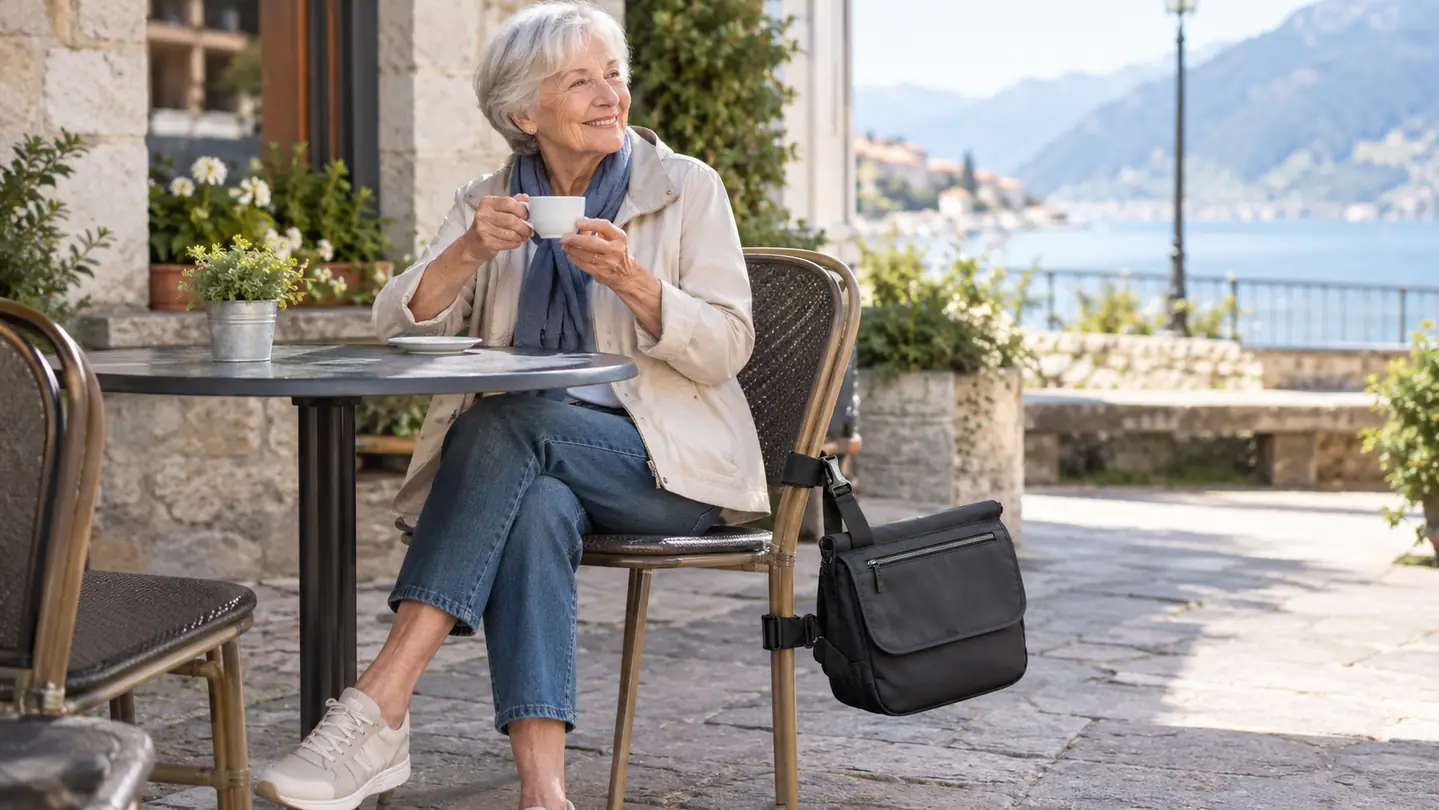
The clip on the Travelon strap is the feature I use most, and I did not expect that. At a cafe, I loop the strap around the leg of my chair and clip it closed. The bag stays within reach, attached to something that weighs more than I do. A thief cannot walk by and lift it off the back of the chair while I am reading the menu. It is the single most useful habit I have learned in two years of using this bag.
On the river cruise, my sister June and I got into the habit without thinking. We would sit down at an outdoor table, and the first thing we did was loop and clip. It took two seconds. It also ended the little argument that every traveler knows: 'Will you watch my bag while I get us more coffee?' Neither of us had to watch anything. The chair was doing it for us.
One warning: clip to the chair leg, not the table. A thief can lift a whole cafe table. A chair, they would have to drag, and dragging a chair out from under a person is not a quiet crime. And do not clip the bag to a railing and then walk away. The clip keeps the bag where you left it, but if you leave it, you have left it. The bag is a tool, not a promise.
Step 5: Run the same check every time you leave a spot
This is the habit that catches the mistakes the other steps prevent. Every time I stand up to leave anywhere, I run the same check: phone, passport, glasses, wallet. I touch each pocket in the same order. It takes four seconds. The check has caught my phone before I walked away from a taxi and my glasses on a buffet table before I walked back to the cabin.
Here is why the order matters. If you always check in the same order, you never have to think about whether you checked everything. Your hand goes to pocket one, pocket two, pocket three, pocket four, and you are done. If the phone is not in its pocket, you know it immediately, because the pocket is empty and you can feel it. The habit does the thinking for you.
Pair the check with one simple rule: the bag is either on your body, clipped to something, or in your hand. It is never on the back of a chair, never on the floor beside your foot, and never under a seat. That rule, plus the four-second check, covers the two ways things actually get lost. You set them down, or someone takes them. I have stopped doing both.
What Else Helps
The bag does the heavy lifting, but a few small habits make the whole system stronger. I carry only what I need for the day. My passport stays locked in the hotel safe, and I carry a photocopy of it in my bag instead. If someone takes my bag, I have lost a photocopy, not my ability to get home. That one change took the fear out of the whole trip.
I also split my cash and cards. The daily cash goes in the bag. A backup card and a little extra cash go in a flat pouch inside my jacket, not in the bag at all. If the bag ever does disappear, I still have a way to pay for dinner and a way to get a new hotel key. It is insurance that costs nothing and weighs nothing.
One more thing: I take a photo of everything in my bag before I leave the hotel each morning. It takes ten seconds. If something goes missing, I have a list of exactly what was in there, which is more useful than you would think when you are standing in a police station in a city where you do not speak the language. I have never needed it, and I am glad I have it.
And I will add this because nobody told me for the first sixty years of my traveling life: the people who steal from tourists are not looking for a challenge. They are looking for an easy bag. A bag that locks, clips, and stays in front of you is not easy. Most thieves will simply move on to the person who is still carrying a magnetic snap, and I say that with zero judgment, because that person used to be me.
Two years, a dozen crowded trips, and I have not lost a single thing from this bag. My old purse was opened in Rome before I felt a thing.
Here is the thing I want you to take away, whether you buy this bag or any other: the goal is not to be the traveler who is always watching their stuff. The goal is to be the traveler who does not have to. Get the right bag, run these five steps, and you will spend your trip looking at the cathedral instead of patting your pocket. That is what travel is supposed to be.
Make your next trip the one where you stop worrying
A bag that locks, clips, and keeps your hands free is the difference between a nervous trip and a relaxed one. See today's price on Amazon and decide for yourself whether it is worth it.
Amazon Check Today's Price on Amazon →