
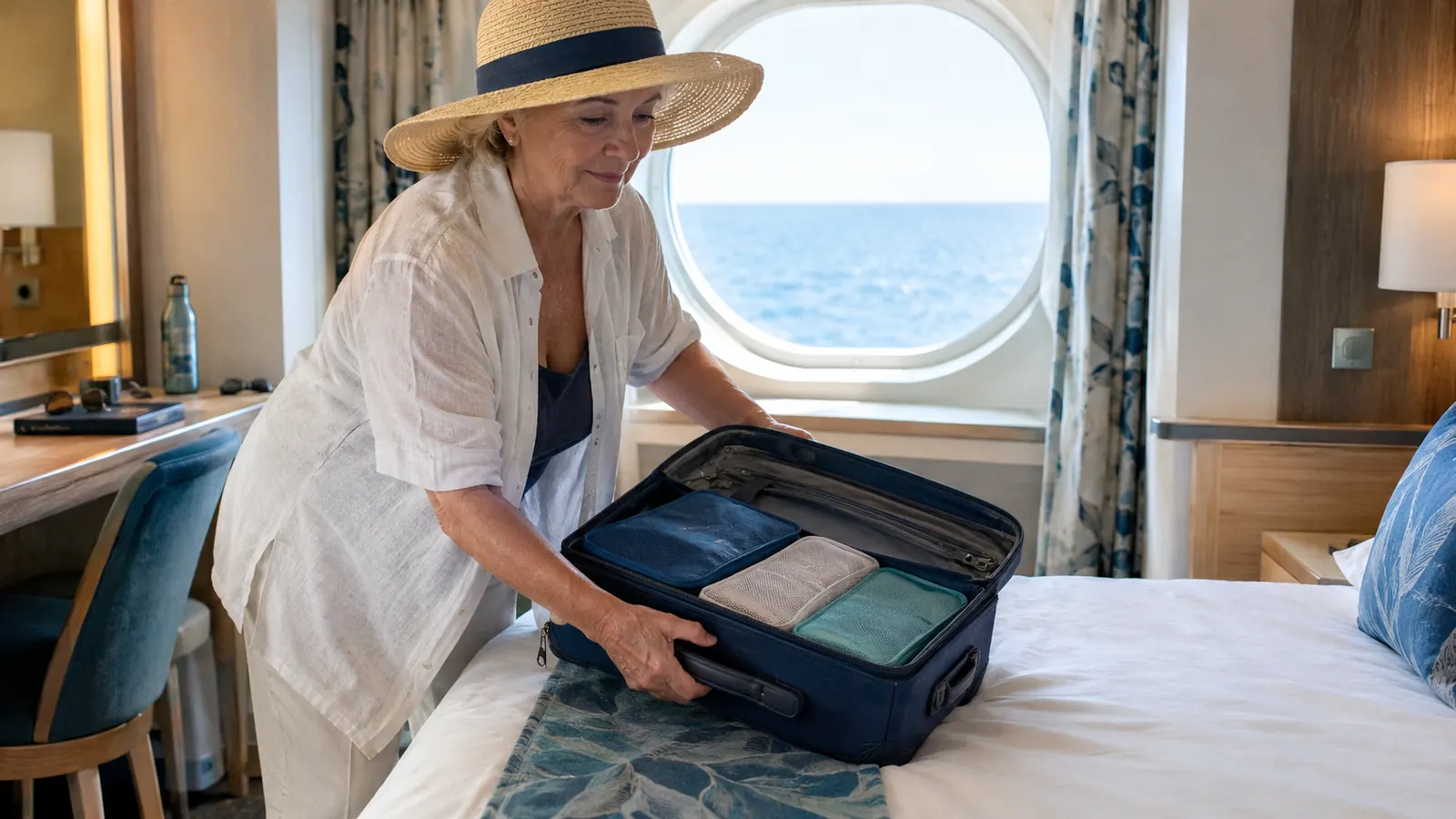
Last spring, my sister June and I booked a seven-night cruise out of Fort Lauderdale. I was excited right up until the moment I stood in my bedroom with an empty suitcase and a pile of clothes that looked like it could fill a closet. I have packed for dozens of trips in my 79 years, but a cruise is its own animal. You need daytime clothes, dinner clothes, something for the pool deck, something for shore excursions, and a sweater for the air-conditioned dining room. My old method, rolled clothes stuffed into gallon zip bags, worked fine for a long weekend in Denver. It did not work for a week at sea.
That was the trip I bought a set of BAGAIL packing cubes, the 8-piece set, and learned to pack a cruise suitcase the way I still do today. This guide is the method I settled on after that first cruise and two more since. It is not about packing less. It is about packing smarter, so you can find your dinner shoes without unpacking everything onto the bed.
Start With Cubes That Fit the Way You Actually Pack
The BAGAIL 8-piece set gives you five cubes in different sizes plus three flat pouches. That range is what makes the cruise method work, because different clothes need different cube sizes.
Amazon Check Today's Price on Amazon →Step 1: Sort Everything Into Piles Before You Touch the Suitcase
I know it is tempting to start tossing things in. Do not. Pull everything you think you want to bring and put it on the bed in piles: tops, bottoms, underthings, shoes, toiletries, and the small stuff like scarves and swimsuits. Then walk away for ten minutes. When you come back, you will see the piles with fresh eyes and start making cuts without even trying. I learned this the hard way. On a river cruise in Europe two years ago, I packed the way I always had, and I paid for it. I had three sweaters I never wore and I left my good walking shoes at home. June still brings that up.
For a seven-night cruise, I aim for five to six tops, three bottoms, two swimsuits, one sweater, and one nicer outfit for the formal night. That sounds like a lot, but it fits in one carry-on when it is divided into cubes. The sorting step matters because it forces you to decide what earns a spot. If a shirt did not make the pile, it does not make the suitcase. I do this the night before, not the morning of. The morning of a trip is when my hands ache and my patience runs short, and that is exactly when bad packing decisions get made. Last spring, sorting the night before, I pulled out a second pair of dress shoes before I ever touched a cube. I wore the first pair twice all week and never once missed the second.
This is also the moment to check the ship's dress code. Most lines have one formal or dressy night, and the rest of the week is casual. Pack for the actual itinerary, not the idea of a cruise you saw in a movie. I start with the ship's schedule, because a cruise has its own rhythm. There is a formal night, a couple of casual dinners, a shore-excursion day, and a sea day when everyone lives in shorts and a swimsuit. I lay out one outfit for each of those, plus one extra top in case of a spill in the dining room.
Step 2: Roll Each Item Tightly, Then Tuck It Into the Right Cube
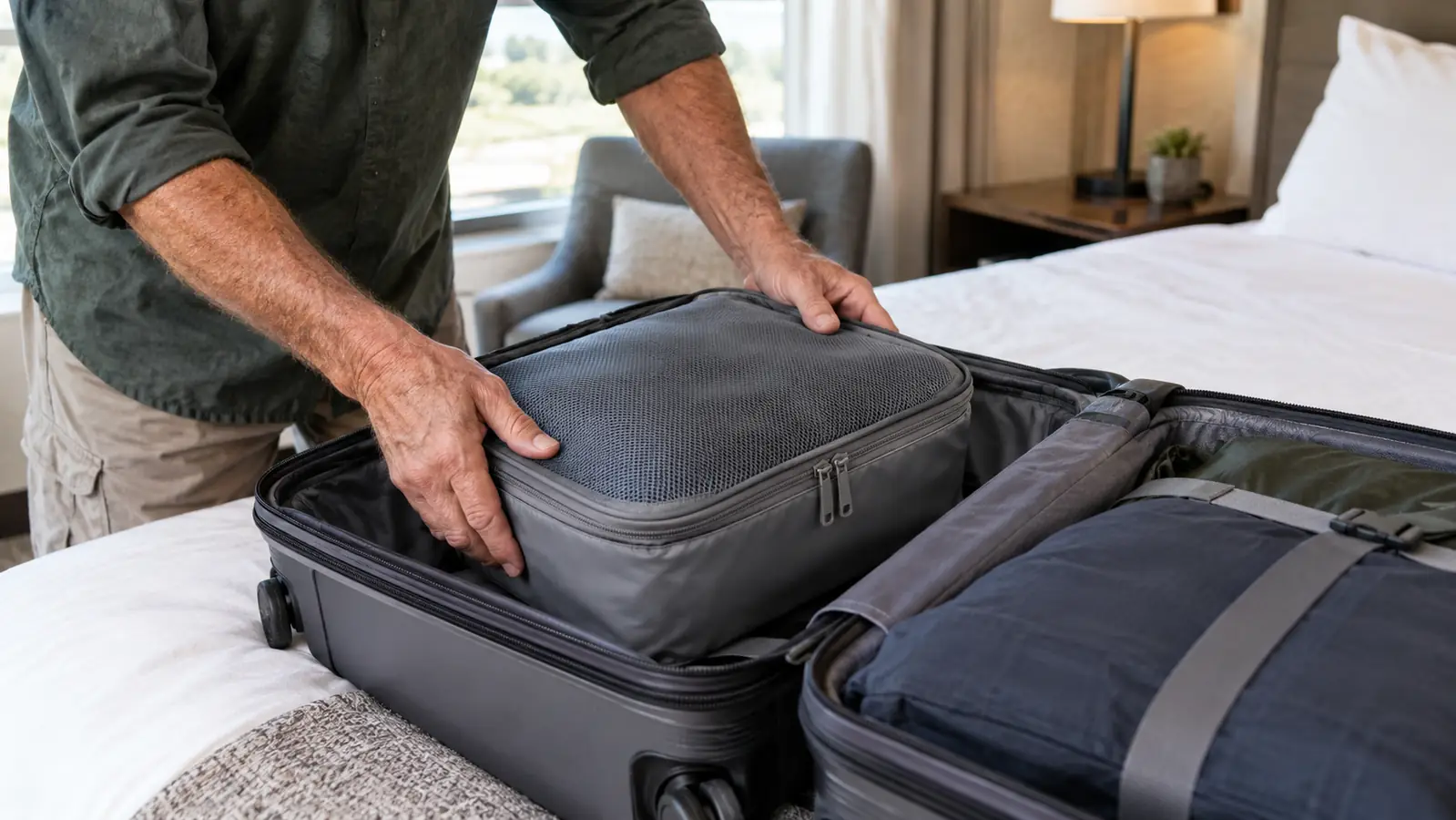
Rolling is still the best method for most clothes. It saves space and keeps wrinkles down better than folding, especially for knits and cotton. The trick is to roll tightly, like a sleeping bag, so the roll is firm and uniform. Loose rolls waste space and slide around inside the cube. Before I bought the BAGAIL cubes, my method was rolled clothes stuffed into gallon zip bags. It worked for a long weekend in Denver, but on a cruise it fell apart. The bags never held their shape, so they slid around in the suitcase, and by day three I was digging through a jumble to find one clean shirt.
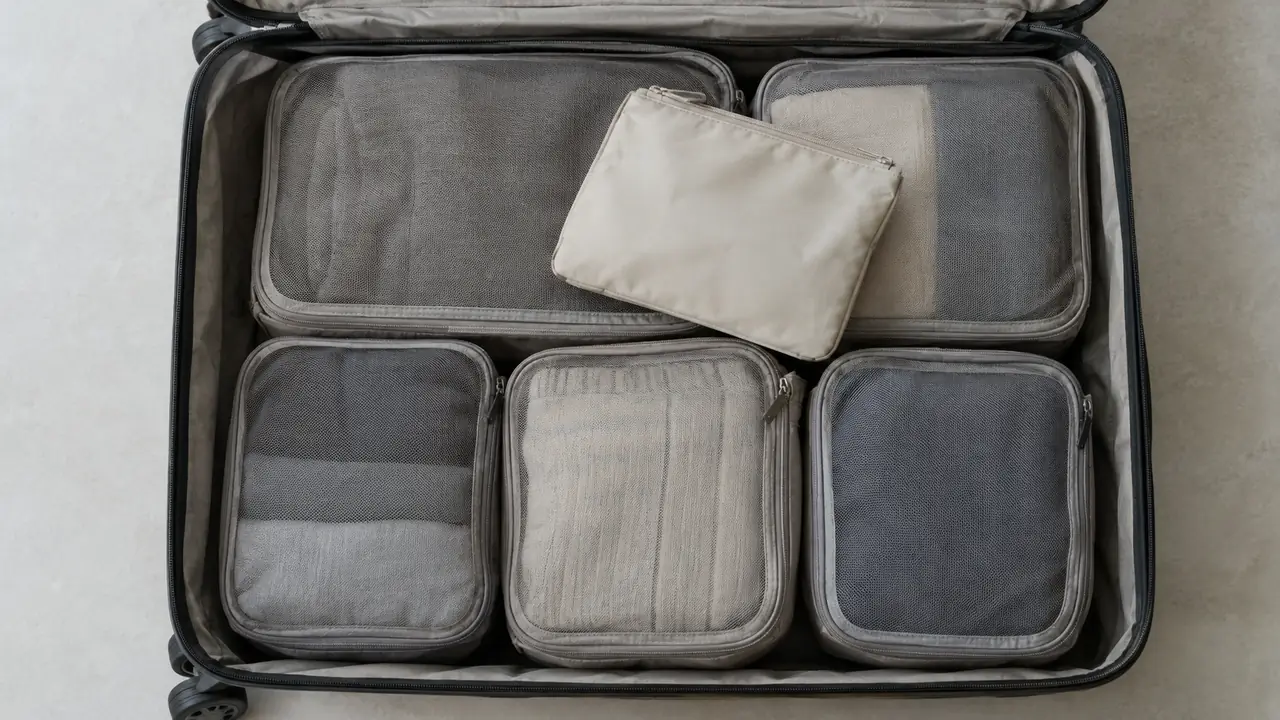
Now match the clothes to the cube sizes. In the BAGAIL set, I use the two large cubes for bottoms and bulkier items like sweaters. The medium cubes hold tops, and the small cubes are perfect for underthings, socks, and swimsuits. The flat pouches are for things like chargers, jewelry, and medication, so they do not get lost in the bottom of the bag. The sizes matter more than I expected. The largest cube fits a folded sweater with room to spare, and the smallest is about the size of a paperback book. I measured the largest one once, out of curiosity: about 17 inches long, 12 wide, and 4 deep. That is enough for three pairs of shorts or two pairs of jeans, rolled tight.
One thing I learned the hard way: do not overstuff a cube. If you have to sit on it to close the zipper, it is too full. A cube that closes easily keeps its shape, and a cube that keeps its shape packs more neatly in the suitcase. You will also be able to close it again on the way home, which matters more than you think. The small cube is the workhorse. Mine holds four pairs of socks, two sets of underthings, and a swimsuit, and it still closes flat.
Step 3: Pack the Suitcase From Heavy to Light, Bottom to Top
Shoes go in first, along the hinge side of the suitcase so they do not press against your clothes when the bag is upright. I put each shoe in a shower cap or a small plastic bag so the soles do not touch anything else. Then I lay the heavy cube, the one with jeans or shorts, on top of the shoes. Heavy things belong at the bottom, near the wheels, because that is where the suitcase balances best. I learned this the hard way on my first cruise with this method. I packed the light cubes on the bottom and the heavy ones on top, and by the time we reached the cabin the whole suitcase had shifted. The heavy cube had slid against the lid, and I had to unpack everything to find my dinner shoes.
Next come the medium cubes, arranged like bricks. The goal is to fill the whole footprint of the suitcase with no gaps. If there is a gap, fill it with a flat pouch or a rolled belt. Gaps are wasted space, and wasted space is why suitcases end up overstuffed at the end of a trip. I use a Travelpro Maxlite 5, a 20-inch carry-on I bought about two years ago to replace an old two-wheel roller from the 1990s that pulled my shoulder. It balances best with the weight near the wheels. When I stand it upright in the cabin, it does not tip over, and I can open it on the bed without everything spilling out. That matters more on a cruise than anywhere else, because the cabin is small and there is nowhere to spread out.
Light things, like the sweater cube and the swimsuit pouch, go on top. When you open the suitcase in your cabin, the first thing you see should be the light layer. That way you can grab a sweater without digging to the bottom and rearranging everything you packed. On our spring cruise, the light layer on top meant I could grab my sweater for the air-conditioned dining room without unpacking a single cube.
Step 4: Use Every Pocket and the Space Inside Your Shoes
Shoes are not just shoes. They are also storage. I tuck socks, belts, and small items like jewelry pouches inside each shoe before I bag it. This uses space that would otherwise be empty and keeps small things from getting lost. Just remember to take them out before you wear the shoes, which sounds obvious but has caught me more than once. The shoe trick saved me on the last afternoon of our spring cruise. We were in port in Cozumel, and I had packed my good sandals with a pouch of earrings inside. When I went to change for dinner, I found the sandals and the earrings right where I left them, in the shoe bag, and I did not have to dig through the whole suitcase. That is the whole point of the system: everything has a place, so you never have to tear the suitcase apart to find one thing.
The BAGAIL set includes three flat pouches, and I use every one. One holds chargers and cables. One holds medications and a small first-aid kit. One holds jewelry and hair accessories. Because the pouches are flat, they slide into the gaps between cubes or into the suitcase lid pocket without adding bulk. I keep my medications in the same pouch every trip, always in the same spot in the suitcase. On embarkation day, that pouch goes into my personal bag, so I never have to wonder where my blood pressure pills are. My hands have mild arthritis, so a pouch with a smooth zipper I can grip matters more than it used to.
The suitcase lid is the last frontier. I use the mesh pocket for documents and the flat space under the handles for a folded tote bag or an extra pair of sandals. If it fits flat, it belongs in the lid. The zippers on these pouches are easy to catch and pull, which is something I did not expect to care about until I tried it.
Step 5: Keep a Personal Item With the Things You Need During the Day
On a cruise, your suitcase may not reach your cabin until late afternoon. That is why the last step is about what stays with you. I carry a personal item bag, my Travelon anti-theft messenger, with my documents, medications, a change of clothes, and a swimsuit. If the suitcase is delayed, I can still change for dinner and take my medication on time.
I also keep one BAGAIL flat pouch in my personal bag for the things I will need on embarkation day: boarding pass, sunglasses, lip balm, and a small crossbody bag for shore excursions. When we get to the cabin, I move the pouch to the safe and the suitcase is already mostly unpacked in a way.
This step is what separates a good packing system from a great one. The suitcase method gets you from home to the cabin. The personal item method gets you through the first afternoon without stress.
What Else Helps
A few small things make the cube method work even better. A hanging toiletry kit keeps your bathroom stuff off the counter and out of the way. A small laundry bag, even just a reusable grocery bag, gives dirty clothes a home so they do not mix with clean ones. I also bring a few extra plastic bags for wet swimsuits and shore-excursion shoes. None of these cost much, and all of them save time on the ship.
The other thing that helps is practice. The first time I packed with BAGAIL cubes, I unpacked and repacked three times before I was happy. Now it takes me about twenty minutes from empty suitcase to closed lid. The method becomes automatic, and that is when travel gets easy again.
The first time I packed with BAGAIL cubes, I unpacked and repacked three times before I was happy. Now it takes me about twenty minutes from empty suitcase to closed lid.
Pack Once, Unpack Once, Enjoy the Cruise
The BAGAIL 8-piece set has made every trip easier since I bought it. If you are tired of living out of a messy suitcase, this is a simple fix that keeps working trip after trip.
Amazon Check Today's Price on Amazon →