
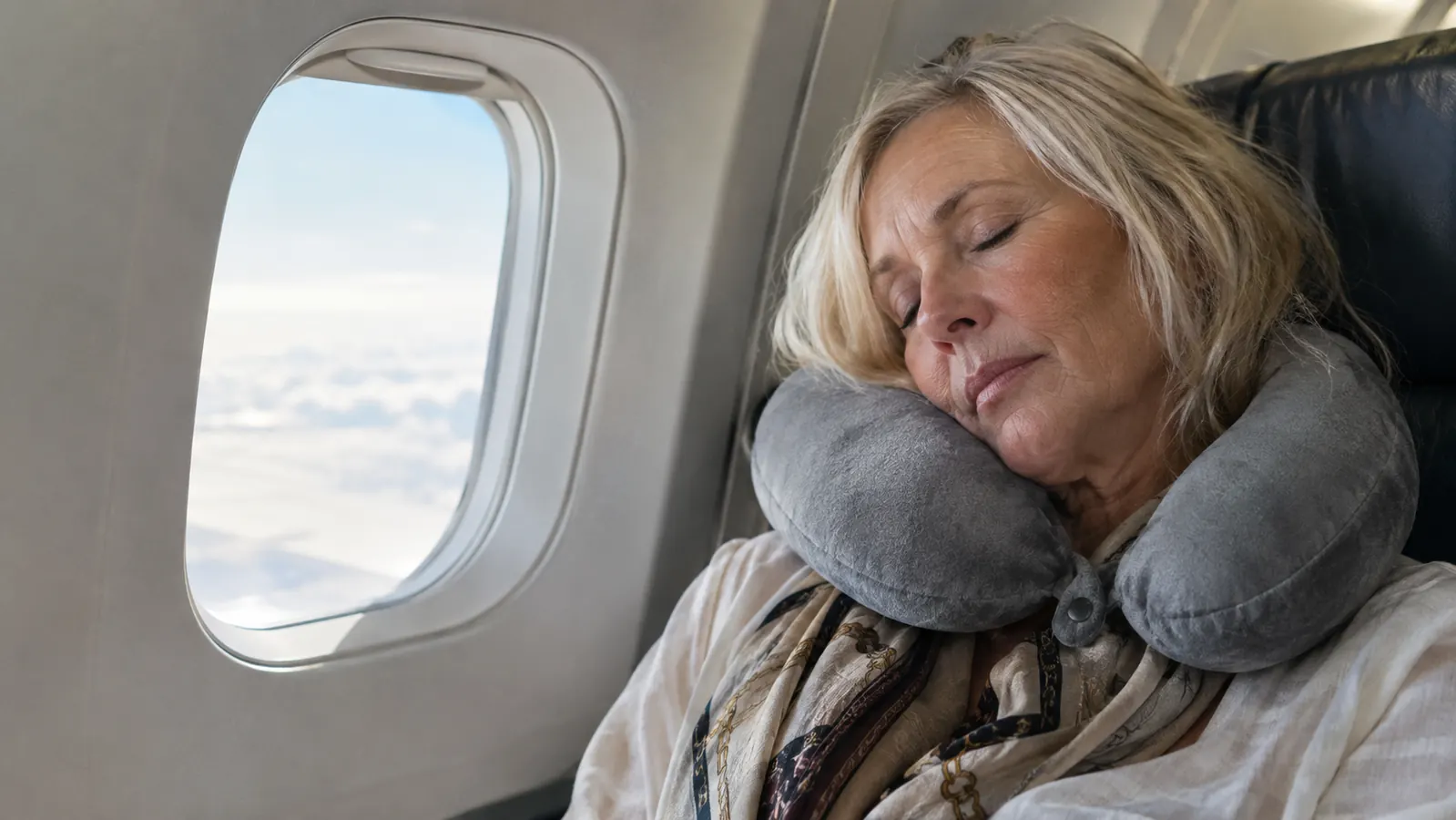
The hardest part of a long flight for me is not the waiting or the cramped legs. It is the head dropping forward the minute I start to doze. I bought my BCOZZY travel neck pillow about 18 months ago, before a trip to Denver to see my daughter, and it changed the way I sleep on planes. This guide walks through the steps I use, from choosing the right pillow to settling into your seat. It is written for travelers like me, people in their 60s, 70s and 80s who want a decent nap at 35,000 feet without waking up with a crick in the neck.
I will be honest. A travel pillow is not a bed. You will not sleep like you do at home. But you can sleep well enough to land feeling human, and the right pillow makes the difference. Here is what works for me.
The pillow that keeps my head from dropping
This is the BCOZZY chin support pillow I have used on a dozen or more flights. It wraps around the neck and supports the chin, so your head stays put when you doze. Check today's price on Amazon before you book your next trip.
Amazon Check Today's Price on Amazon →Why I Reach for This Pillow
The BCOZZY is not the first travel pillow I have owned. It is the first one that actually kept my head where I put it. The reason is the chin support. Most pillows sit behind your neck and let your head roll forward the second you relax. This one wraps around and cradles your chin, so your head stays in place without you holding it there.
I have used it on flights to Denver, on a river cruise in Europe with my sister June, and on a long train ride where the seats did not recline. It works in all of them. It is also easy to clean, which matters to me, and it does not take up much room in my Travelpro carry-on.
I will say the same thing I say to my grandchildren. No pillow will make a red-eye feel like your own bed. But this one makes the difference between arriving ready to go and arriving with a stiff neck and a headache. That is enough for me.
Step 1: Choose the right pillow for the way you sleep
I did not start with a good pillow. I started with a cheap U-shaped bead pillow from an airport shop. It pushed my head forward and I woke up every time my chin hit my chest. When I finally tried the BCOZZY, I understood the difference. The chin support does the work. It holds your head in place instead of just cushioning the back of your neck.
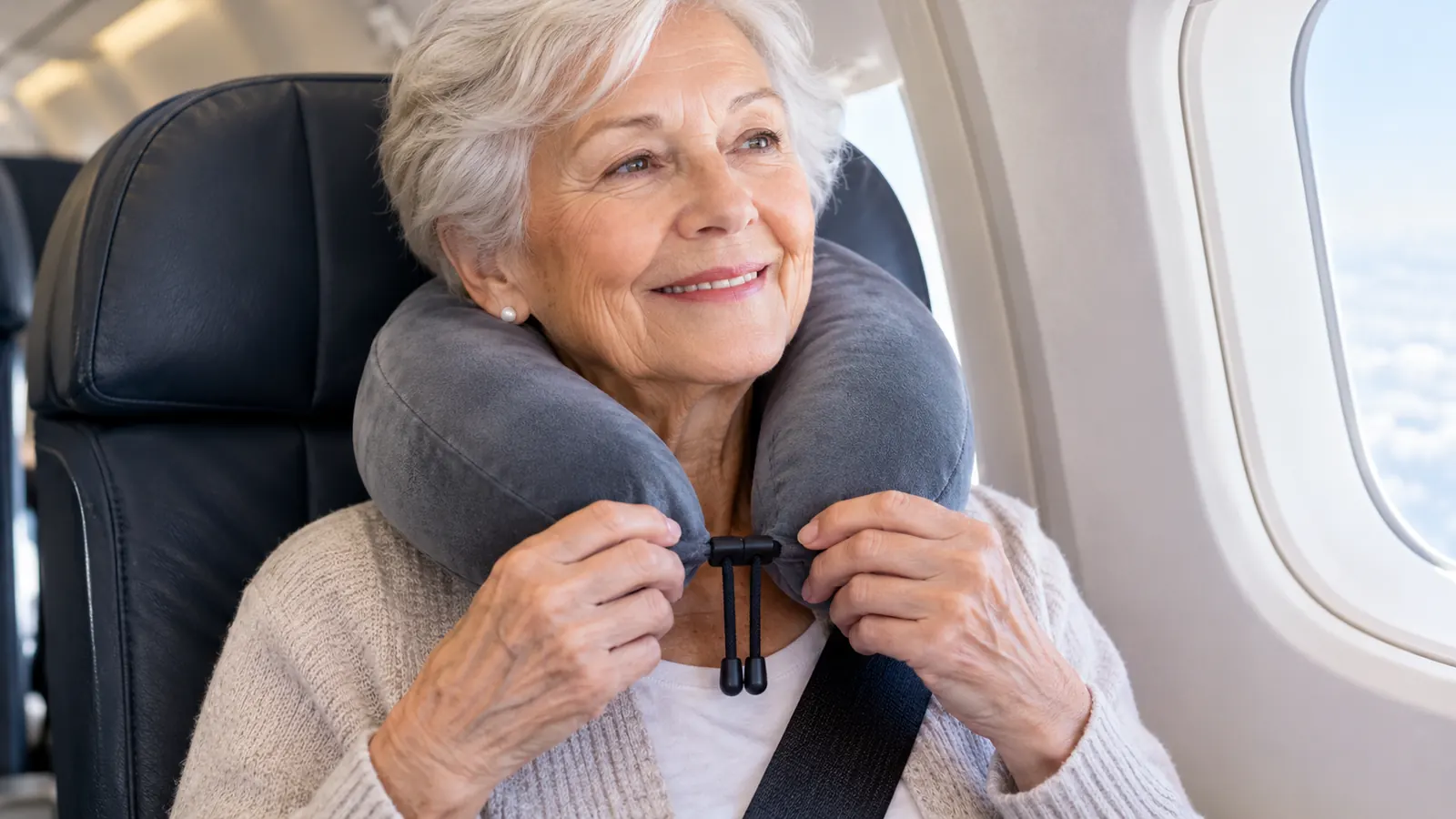
Think about how you fall asleep at home. I am a side sleeper and a chin tucker. I need something that keeps my head from rolling forward. If you lean to one side, look for a pillow you can adjust. If you sleep with your mouth slightly open, you want gentle support under the chin, not pressure. The BCOZZY has an adjustable strap and soft foam that molds without fighting you.
You do not need the most expensive pillow on the shelf. You need one that fits your neck and your seat. I chose this one because it is soft enough to bend and firm enough to hold. I also think about material. Some pillows are too firm and push your head forward. Some are too soft and collapse. This one sits in the middle. It still bounces back after eighteen months of trips.
Step 2: Set it up before you board
The biggest mistake I see is people waiting until the plane is in the air to wrestle with a pillow. Do it at the gate or at your seat before takeoff. I take mine out of my Travelon messenger bag while I am waiting to board, loosen the strap, and give it a quick squeeze to fluff it. I also put it on before I fasten my seatbelt, so I can adjust it while I am still upright and alert.
If the pillow has a clip or a strap, adjust it now. You want it snug enough to stay in place but loose enough to be comfortable. I like to position the thicker part under my chin and the sides along my jaw. That takes about thirty seconds on the ground and saves me five minutes of fumbling at 30,000 feet.
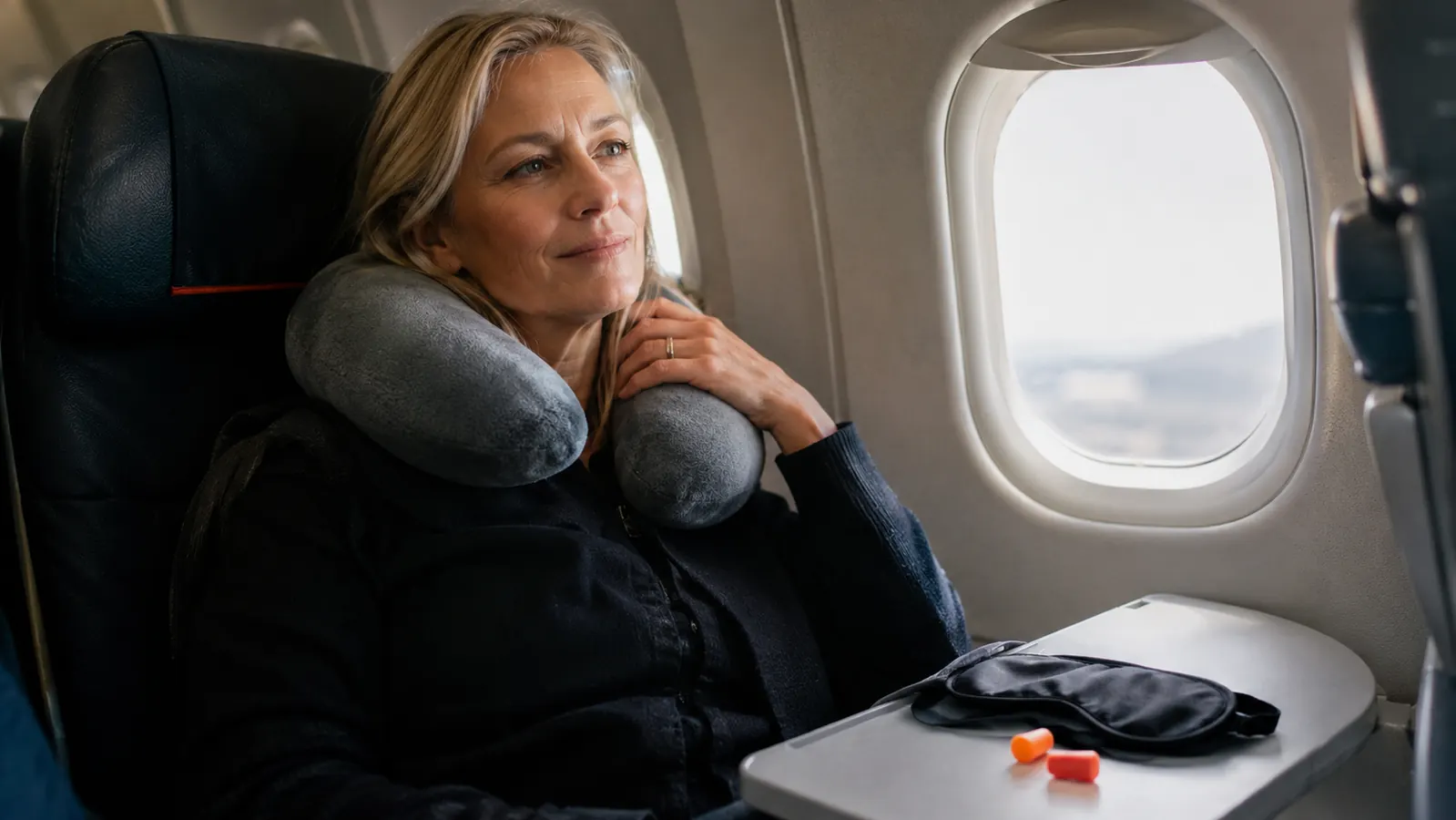
I also put everything else I need for the flight in the seat pocket before takeoff. Earplugs, a small eye mask, a bottle of water. That way I do not have to dig through my bag and wake myself up. My BCOZZY goes around my neck last, right before the cabin lights go down.
Step 3: Get the chin support just right
The mistake I made at first was wearing it backward. I wear it with the thicker part in front, under my chin. That is what keeps my head from dropping forward. When I first tried it, I had it backward and it did nothing. Turn it around and you will feel the difference immediately.
Adjust the strap so your chin rests in the cradle without your head tilting down. You want your ear to stay in line with your shoulder. If the pillow pushes your chin up, loosen it. If your head still falls forward, tighten it a little. It takes a few tries to find the sweet spot, but once you do, you can doze for an hour without moving. If you wear glasses, take them off before you settle in. The pillow will push against the arms and wake you up.
One note for anyone with a short neck or arthritis in the hands, like me. The strap on this pillow is easy to work, but if you have trouble with small clips, adjust it before you board. There is no need to fight with it in a dark cabin.
Step 4: Use your seat and the pillow together
A pillow works best when you work with the seat. I put my seat back as far as it will go, which on most planes is not very far, and I use the pillow to fill the gap between my neck and the seat. I also use a small folded scarf or my jacket as a lumbar cushion. It sounds fussy, but it takes one minute and it changes the whole flight. I use the pillow on shorter flights too, because even two hours is long enough for my neck to complain.
If you are by the window, lean toward the window and let the pillow support your cheek. If you are in the aisle, lean slightly forward and let the chin cradle hold your head. The goal is to keep your spine in a neutral line. Your neck should not be bent at an angle that will ache later.
I also tell people to skip the tray table unless they are using it. A pillow on the tray table can work for some, but it makes me hunch. I would rather sit upright with the pillow around my neck and my feet flat on the floor. My Travelpro carry-on goes under the seat in front of me, and I rest my feet on it for a little elevation.
Step 5: Build a tiny sleep kit around it
The pillow is the center of my sleep kit, but it is not the whole kit. I carry a small eye mask, foam earplugs, and a light scarf. The scarf doubles as a blanket and a neck cover when the air conditioning is too cold. I keep it all in one packing cube from my BAGAIL set so I can find it without turning on the overhead light. I also stay away from inflatable pillows. They are noisy and never feel right. Foam is quiet and soft.
I also carry my INIU charger in my personal bag. A dead phone is a sure way to ruin a good nap, because you will spend the whole flight worrying about it. I charge my phone before boarding and top it off during the flight if I need to. The charger is small enough to fit in the seat pocket.
Do not pack your sleep kit at the bottom of your carry-on. Keep it in the seat pocket or in the outer pocket of your personal bag. The whole point is to settle in quickly, sleep, and wake up without a stiff neck. My BCOZZY pillow goes around my neck, the mask goes over my eyes, and I am ready.
What I Wish I Had Known Sooner
I wish someone had told me to try the pillow before my first flight with it. I wore it around the house for an afternoon while I read, just to get the strap right. It felt a little silly, but it meant I did not have to learn on the plane. The first flight with the BCOZZY was the first flight I slept on in years.
I also wish I had known that the pillow works best when you are already relaxed. I used to board wound up, checking my phone, worrying about connections. Now I take a few slow breaths, put my mask on, and let the pillow hold my head. It is not a sleeping pill. It is just a helpful nudge in the right direction.
There is one more thing I wish I had known. The pillow does not have to be on for the whole flight. Sometimes I take it off to eat or to talk to the person next to me. Then I put it back on when I want to sleep. It takes two seconds and keeps the pillow comfortable.
What Else Helps
A good pillow only works if the rest of your setup is comfortable. I wear slip-on shoes so I can take them off without bending over. I drink water before the flight but skip the extra coffee. I walk the aisle once an hour when I am awake, because my knees stiffen if I sit too long. None of this is dramatic. It is just what works for a 79-year-old who still wants to travel.
I also learned to book a window seat when I can. It gives me something to lean against and a wall to block the light. If I am stuck in a middle seat, I use the pillow and a scarf and make the best of it. The pillow will not do the work for you. It is a simple tool that does its one job well.
If you travel with a partner, tell them you are going to nap. Set a time to meet at baggage claim. That way you are not checking the clock every five minutes. I do this with my sister June, and it lets me actually rest.
The chin support is what makes the difference. Once I turned the pillow around and let it hold my head, I started sleeping through flights I used to dread.
Try it on your next flight
If you are tired of landing with a stiff neck, this is the pillow I reach for every time I fly. It is soft, adjustable, and easy to pack. Check today's price on Amazon and see if it works for you.
Amazon Check Today's Price on Amazon →