
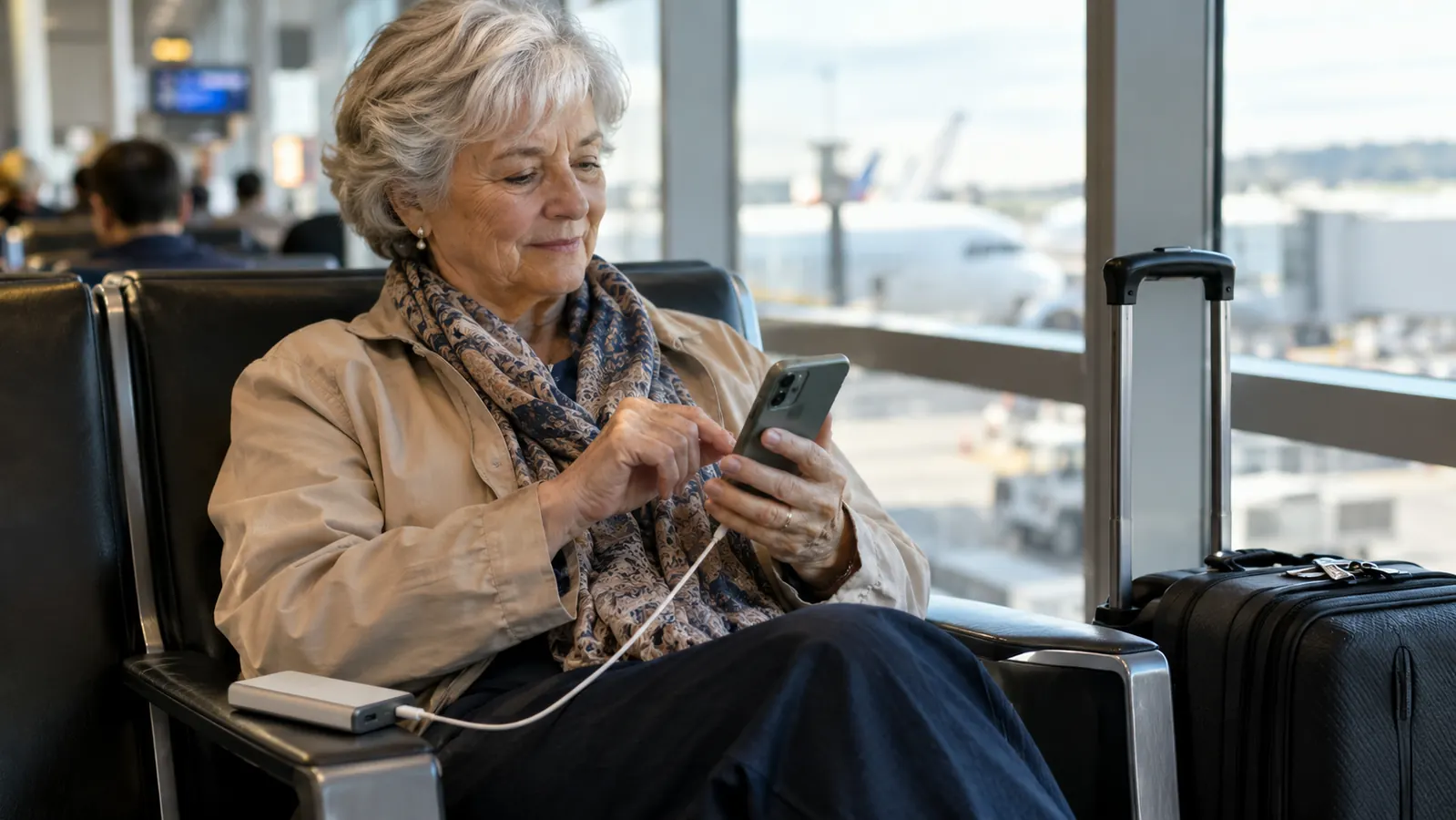
Last spring, waiting for a delayed flight to Denver, I watched a woman about my age hold two power banks in her hands like she was weighing oranges. She turned to her husband and said, "I just want the one where I do not have to think." I knew exactly what she meant, because I had been that woman a year earlier, standing on a cruise ship dock with a dead phone and no way to reach my sister June. That afternoon I bought the INIU 10000mAh portable charger, and it has ridden in my carry-on ever since. June, who travels with me, owns the other kind, a power bank with the cables built right into the case, and we have spent the past year comparing notes at airport gates, in cruise ship cabins, and on long car rides.
If you want the fastest charging, the smallest charger, and one that will still work in five years when the cable finally wears out, the INIU is the better buy. If you want the absolute simplest thing to grab on your way out the door, and you only ever charge one phone, the built-in cable bank has a real advantage. I have carried both, and I am not here to sell you a story. For most travelers my age, I would choose the INIU. For one particular kind of traveler, I would not, and I will tell you exactly who that is.
| INIU 10000mAh | Built-In Cable Power Bank | |
|---|---|---|
| Fits in a small purse | Compact size slips into a zippered pocket next to my glasses case | Longer and thicker because the cables add bulk, harder to tuck away |
| Cables to keep track of | One separate cable, and you can replace it if it frays | Cables attached, so there is nothing to forget or lose |
| Charging speed | 45W fast charging, a phone goes from low to full in about half an hour | Most built-in cable banks charge more slowly, fine overnight, slow between stops |
| If a cable breaks | Replace the cable and keep the bank for years | If the attached cable goes, the whole bank is done |
| Ease for stiff hands | Two plugs to line up, one into the bank and one into the phone | One plug, the cable is already attached and ready |
| Devices it will charge | Any cable you already own, so phones, e-readers, and tablets all work | Usually one built-in cable type, older devices may need an adapter |
How I Tested Both
I have used the INIU for about a year now. It came into my life after my phone died during a shore excursion, which is the travel version of running out of gas in the middle of nowhere. I had no charger in my bag that day, and I have never made that mistake again. Since then the INIU has been with me on the flight to Denver to see my daughter, on a river cruise with June, and on shorter car trips where I navigate with my phone and do not want to watch the battery drain before I reach the exit. It has also charged my e-reader on a long flight, which is the quiet hero of any trip.
June bought her built-in cable bank about six months ago, and she loaned it to me for a long weekend so I could give it a fair test. I charged my phone with it at an airport, in a hotel room, and on a train. I also watched how she actually uses hers, because how a person uses a thing matters more than any spec sheet. She keeps it on the nightstand, drops it in her purse on the way out, and plugs in when she notices her phone getting low. She never thinks about her charger. That is the whole point of hers, and I want to be fair about that. I will also say she has never once borrowed mine, and I have never once had to lend her a cable. That tells me both chargers are doing their jobs.
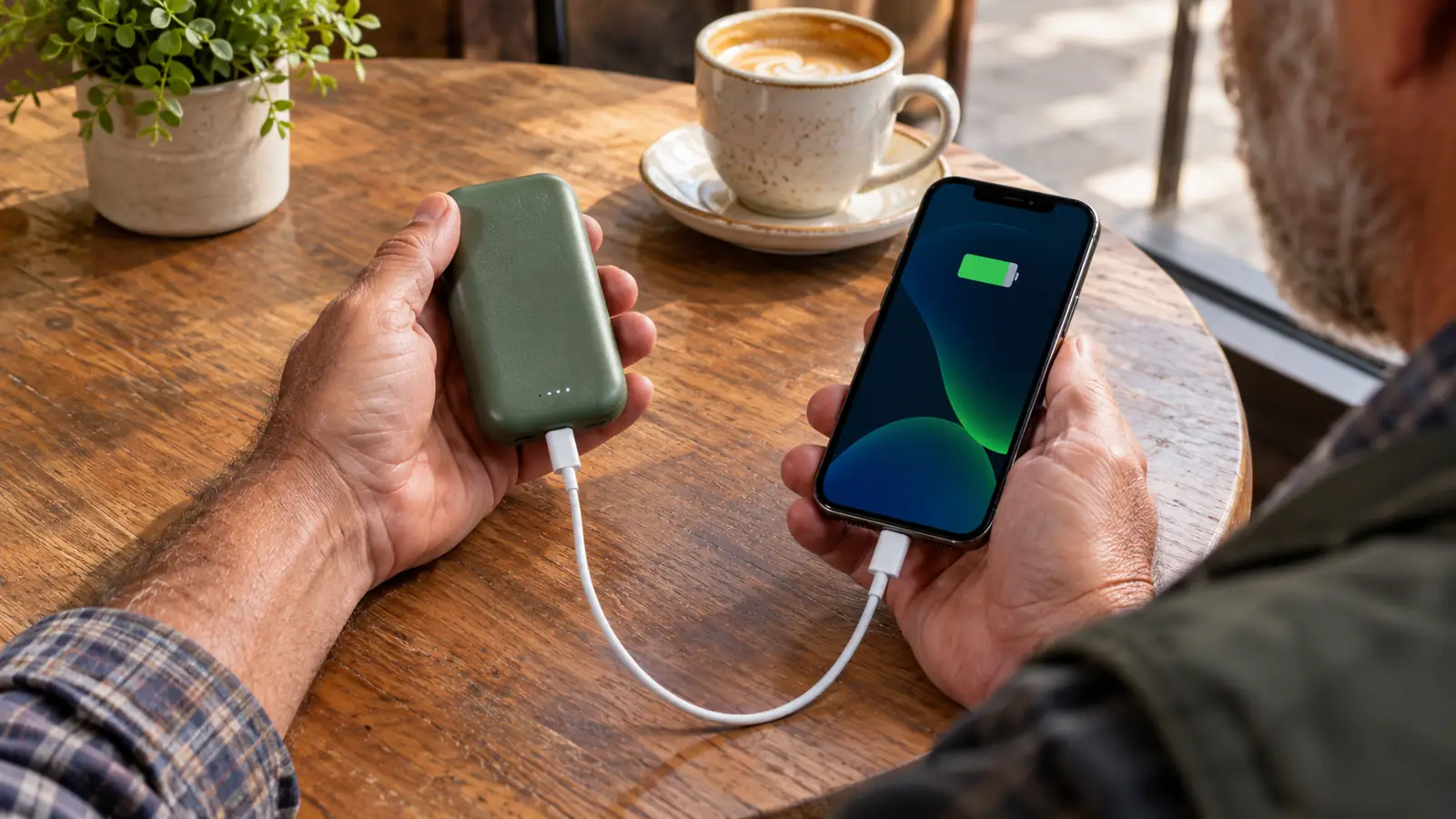
Where INIU Wins
The first difference you notice is speed. The INIU charges at 45 watts, which means my phone goes from a scary low number to a full battery in about half an hour. I plug in at the gate, and by the time they call boarding, I am back to full. The difference matters most on excursion days, when the bus leaves at a set time and the phone is your ticket back to the ship. June's bank charges more slowly. She plugs in overnight, which is fine in a hotel room and not much help when you are standing between a museum and a dinner reservation with a phone at 12 percent.
The INIU is also smaller, which matters more than you would think. It slips into the zippered pocket of my Travelon messenger bag, the one where I keep my glasses case, and I forget it is there until I need it. Small also means it does not pull the pocket of a sweater out of shape, which is the kind of detail you notice when you are 79. June's bank is longer and thicker because the cables add bulk, and it takes up real room in her purse. And because the INIU uses a separate cable, I can charge my phone, my e-reader, or my daughter's tablet. If the cable frays, I buy a new cable and keep the same charger. If June's attached cable breaks, her whole bank is done.
Where the Built-In Cable Bank Wins
Now let me be fair, because this is where June's bank earns its keep. She never has to remember a cable. Her charger is one piece, always ready, and she can grab it off the nightstand and drop it in her purse without a second thought. I watched her do this at 5:30 in the morning before a shore excursion, half awake, and she did not even look at what she was grabbing. On the long weekend she loaned it to me, I understood the appeal within an hour. For a person who only charges one phone and does not want to manage parts, that is a genuine advantage. There is nothing to lose, nothing to forget, and nothing to untangle.
It is also easier one-handed. With the arthritis in my hands, lining up a cable with the little port on the bank takes two hands and a moment of patience. June's bank skips that step entirely. The cable is already attached, so she plugs one end into her phone and she is done. In a crowded airport, standing up, holding a bag, that one less step is real. And on a moving train, with the tray table down and a cup of coffee in the way, simple wins. I am not going to pretend otherwise.
The Test That Settled It
The moment that settled it for me happened on a river cruise. We had an early shore excursion, and both of us woke up with phones below half. I plugged mine into the INIU over breakfast. By the time the bus was loading, I was at 96 percent. June's bank was still working, and her phone had climbed to 71 percent. For her, that was fine. She was not going to use her phone much that day. For me, my phone is my camera, my map, and my way to reach my daughter, and I wanted the full battery.
The second moment went the other way. In a hotel room in Denver, I watched June charge her phone without getting out of bed. Her bank sat on the nightstand, cable attached, and she just reached over and plugged in. I had to dig my cable out of my bag, plug it into the bank, plug the bank into the wall, and then plug my phone in. Four connections instead of one. Standing there with my stiff knees, I understood exactly why she likes hers.
The built-in cable bank wins the grab-and-go test. The INIU wins everywhere else, and it outlives its own cable.
The INIU is the one I have carried for a year
It charges fast, fits in a small pocket, and works with every device I own. If that sounds like what you need, check today's price on Amazon.
Amazon Check Today's Price on Amazon →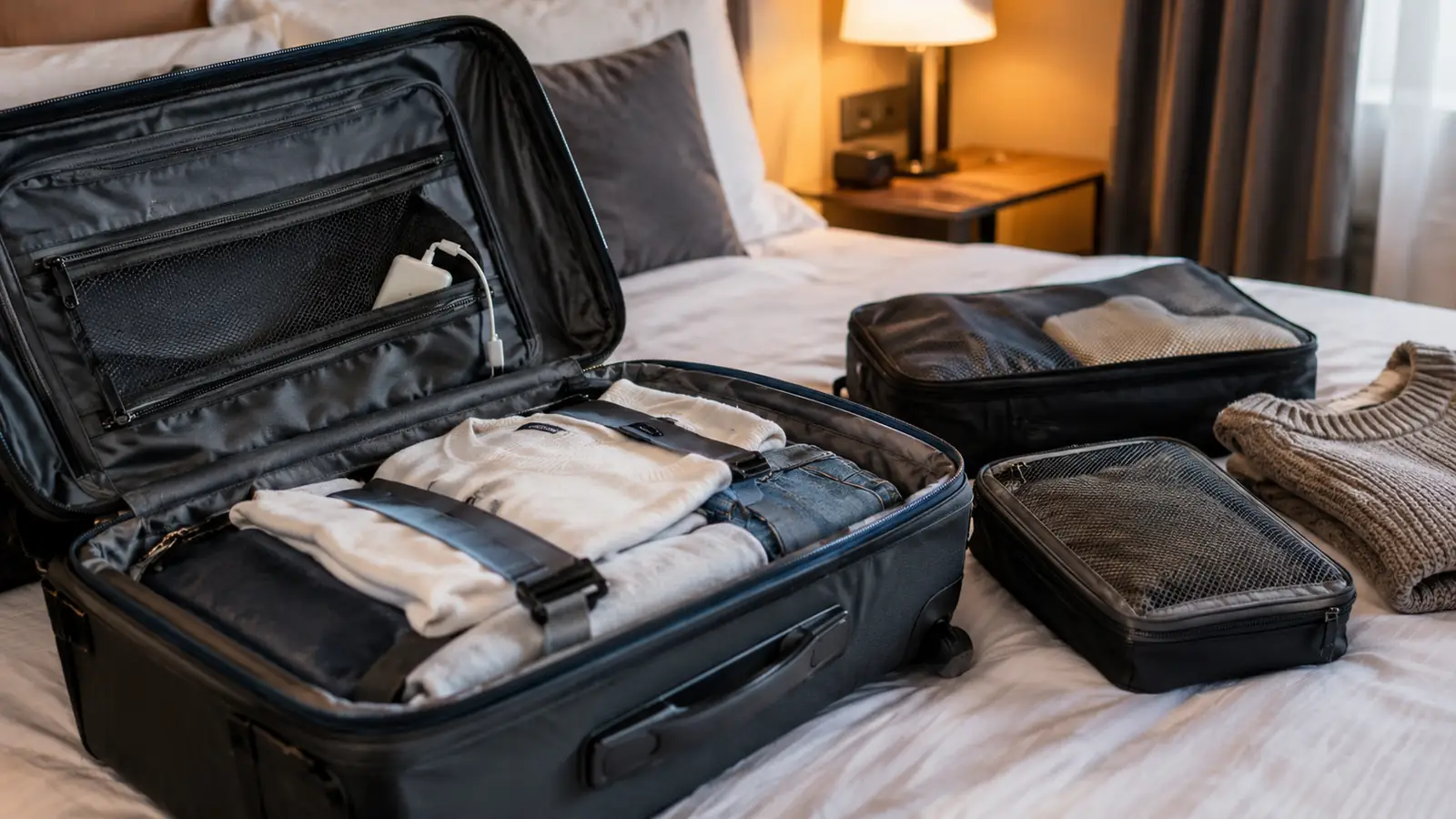
Who Should Buy Which
Buy the INIU if you charge more than one device, if you want a fast top-up between excursions, if you like a charger that disappears into a small pocket, or if you would rather replace a worn cable than a whole power bank. It is also the better choice if you travel with a tablet or an e-reader, because one bank can handle all of them. That describes most travelers I know, including me. It also describes anyone who has watched their phone die at the worst possible moment and decided it would not happen again.
Buy the built-in cable bank if you only ever charge one phone, if you want the simplest possible thing with no parts to manage, and if you do not mind slower charging. My sister June is exactly that traveler, and her bank is right for her. She bought hers after watching me dig through my bag for a cable one too many times, and I cannot argue with her reasoning. I would not try to talk her out of it. But I would also not trade mine for hers.
One more note for anyone buying this as a gift for a parent. The built-in cable bank is the easier gift, because there is nothing to pair or explain. But the INIU is the gift that keeps working after the original cable wears out, and it charges faster, which older eyes and older patience will appreciate. I know which one I would want handed to me.
A Few Things Nobody Tells You About Power Banks
Three things I learned the hard way. First, keep the charger in an easy-to-reach pocket, not buried in your bag, because you will want it at the gate, not after you have unpacked. Second, I always keep mine in my carry-on rather than my checked bag, which is what the airlines ask for spare batteries. Third, a fast charge needs the right cable and a wall plug to reach full speed. Plugged into a slow USB port in a rental car, even the INIU takes its time. And keep the cable wrapped loosely, not tight, because tight wraps are what make cables fail at the end.
And one more thing. A power bank is not a forever item. The capacity fades after a few years of regular use, the same way a phone battery fades. When mine stops holding a charge the way it used to, I will replace it. But I will replace the cable first, because that is the part that wears out fastest, and that is exactly why I chose the INIU over June's bank.
My Bottom Line
Here is the honest answer. If you are the kind of traveler who wants to think about a phone charger as little as possible, and you only charge one phone, the built-in cable bank will serve you well. June proves that on every trip. But if you want speed, a small footprint, and a charger that does not become garbage when a cable frays, the INIU is the better buy. It has been in my carry-on for a year, through Denver flights, river cruises, and long car trips, and it has never let me down. I am not the kind of person who replaces things that still work, and the INIU still works perfectly.
Fast, small, and built to outlast its own cable
The INIU 10000mAh has earned its spot in my carry-on. If you want the same peace of mind, check today's price on Amazon.
Amazon Check Today's Price on Amazon →